
22 July | Partner Insights

By Max Reiff, Partner
Summary
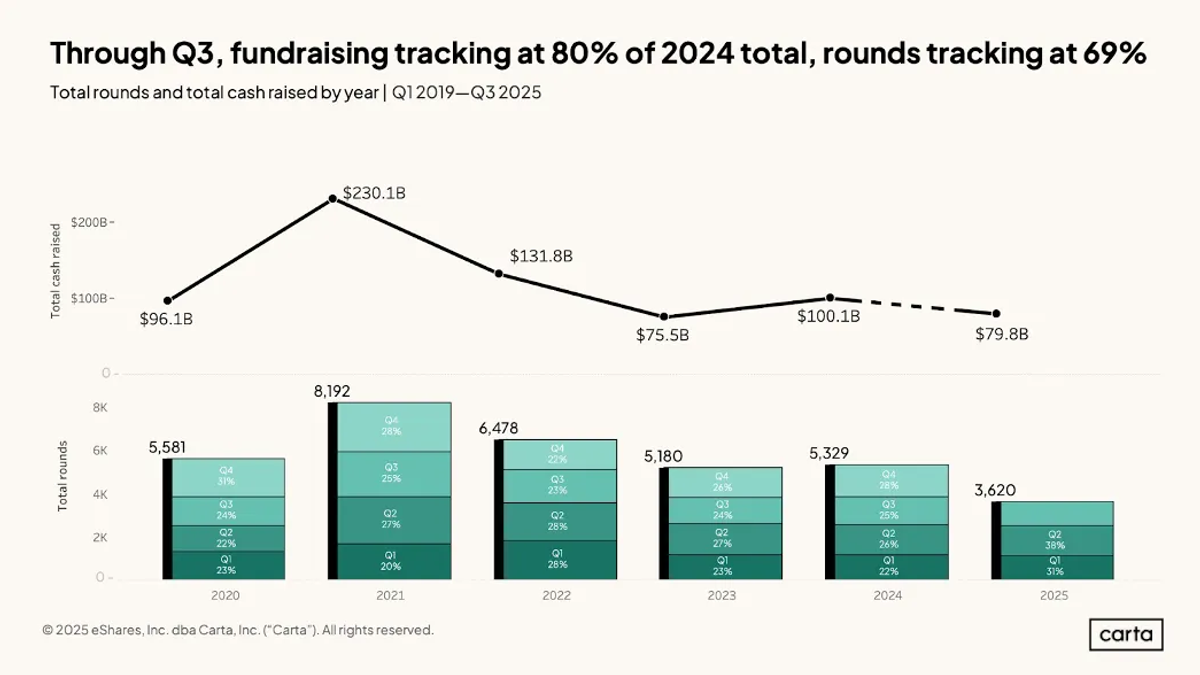
The second half of 2025 (H2’25) reflects a venture market that is active, selective, and increasingly organized around AI-driven capital flows. According to Carta and Preqin, activity expanded at both the early and late ends of the market for structurally different reasons: early-stage in the U.S. strengthened as valuations recovered and down rounds declined, while global deal value surged due to a concentrated wave of mega-rounds in AI models, hardware, and China’s industrial sectors.
The result is a market that is operational again but structurally top-heavy. Liquidity pathways are reopening unevenly, and investors are redeploying with conviction into a narrow set of themes they believe will define the next cycle.
Key Highlights
Press enter or click to view image in full size
Market Context
Carta shows U.S. venture volume held steady in H2 while value expanded materially as check sizes increased in AI-heavy sectors. Capital is flowing deliberately, not aggressively, concentrating into companies with clear technological or commercial leverage.
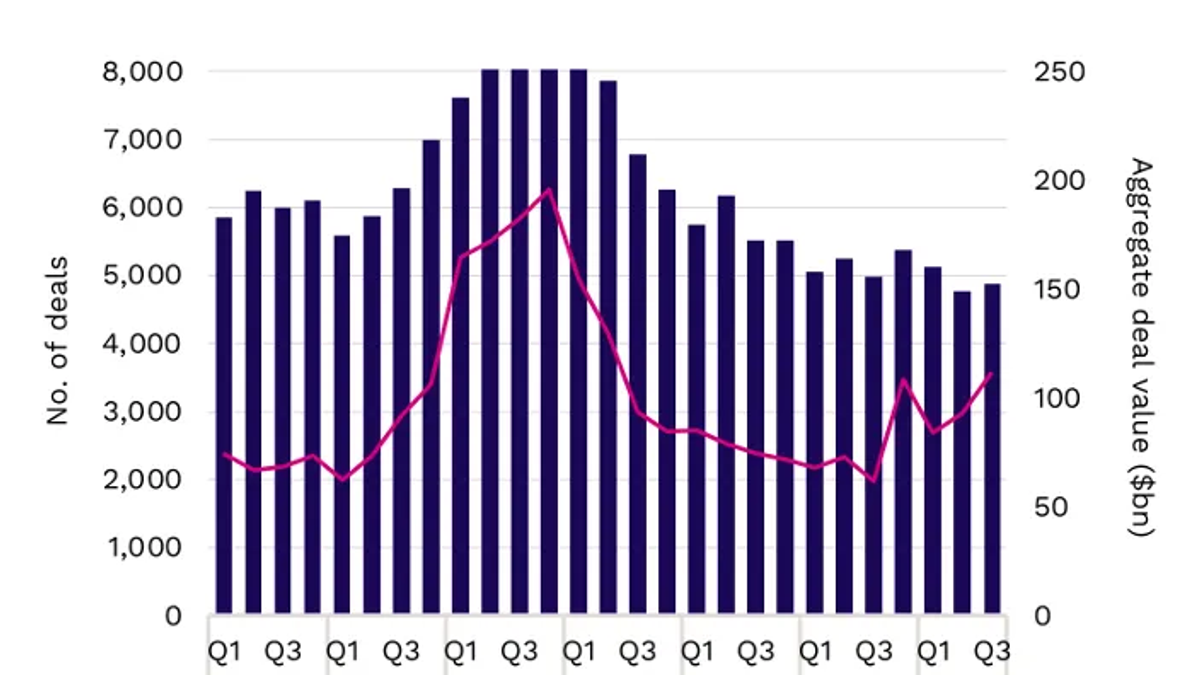
Preqin shows the same pattern globally. Aggregate deal value rose from $93.2B in Q2 to $111.9B in Q3, while deal count increased only marginally from 4,775 to 4,877. This divergence confirms that H2 growth was driven primarily by outsized transactions, not broad-based recovery.
The market is expanding asymmetrically. Most of the ecosystem is still repairing, while a narrow tier of AI and infrastructure-aligned companies continues to redefine the upper end of venture deployment.
Regional Overview
North America
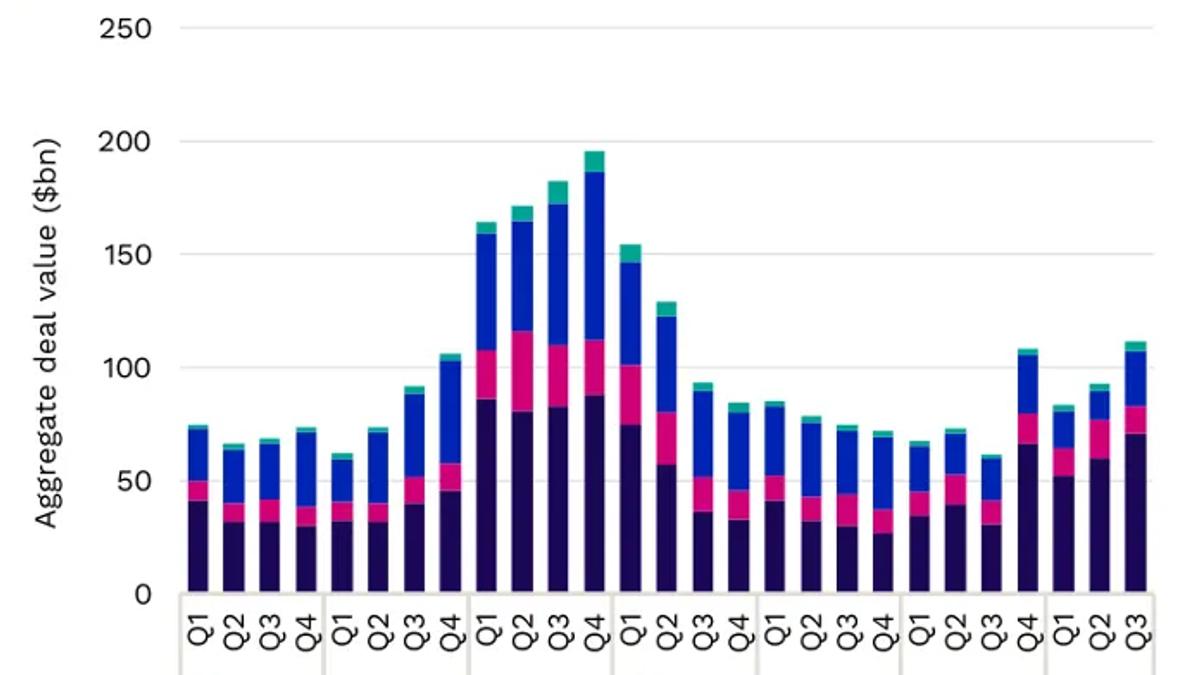
North America remains the gravitational center of global VC. Preqin reports $71.1B in deal value in Q3, up from $59.9B, reinforcing the region’s leadership. Carta data shows the U.S. leading on valuations, round sizes, and fundraising momentum, supported by late-stage AI rounds that continue to anchor overall strength and attract concentrated investor conviction.
Europe
Europe remains soft, particularly across mid-stage rounds. Carta data shows limited participation in the global AI megadeal cycle, which continues to suppress regional growth. The result is stability without acceleration.
APAC
APAC delivered one of the strongest global rebounds. Preqin reports $24.1B in deal value, with China contributing the majority. China alone increased from $6.1B to $16.4B, led by industrial automation and energy systems. Carta confirms improvement, though overall activity remains below pre-2022 benchmarks, signaling recovery rather than full acceleration.
LatAm
Latin American activity appears to be normalizing following Mexico’s surge in H1, with capital flowing mainly into fintech and services. Notably, there was an absence of major large-scale deals in Q3, which kept total regional volume steady and highlighted a market that remains relatively resilient without outsized catalysts.
Valuation & Stage Dynamics
Carta data points to a clear reset in how valuations behave across the stack:
Deal & Funding Trends
H2 2025 reveals widening separation across stages, with early rounds stabilizing and later rounds accelerating as capital concentrates in high-conviction AI-driven plays:
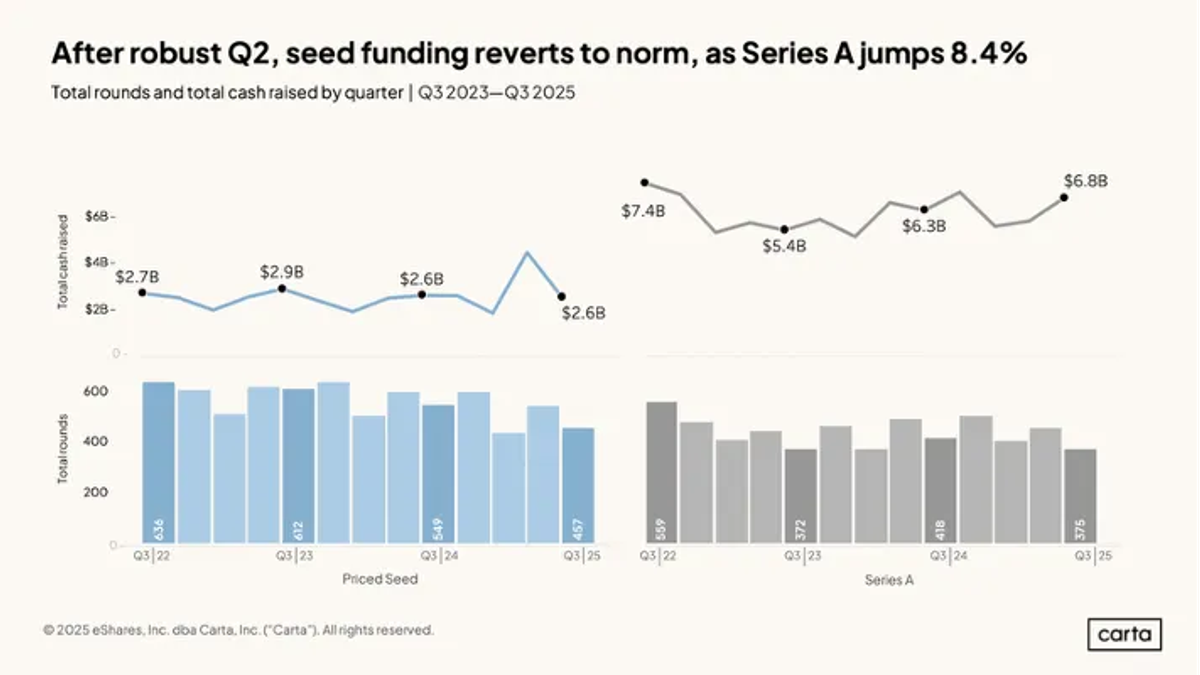
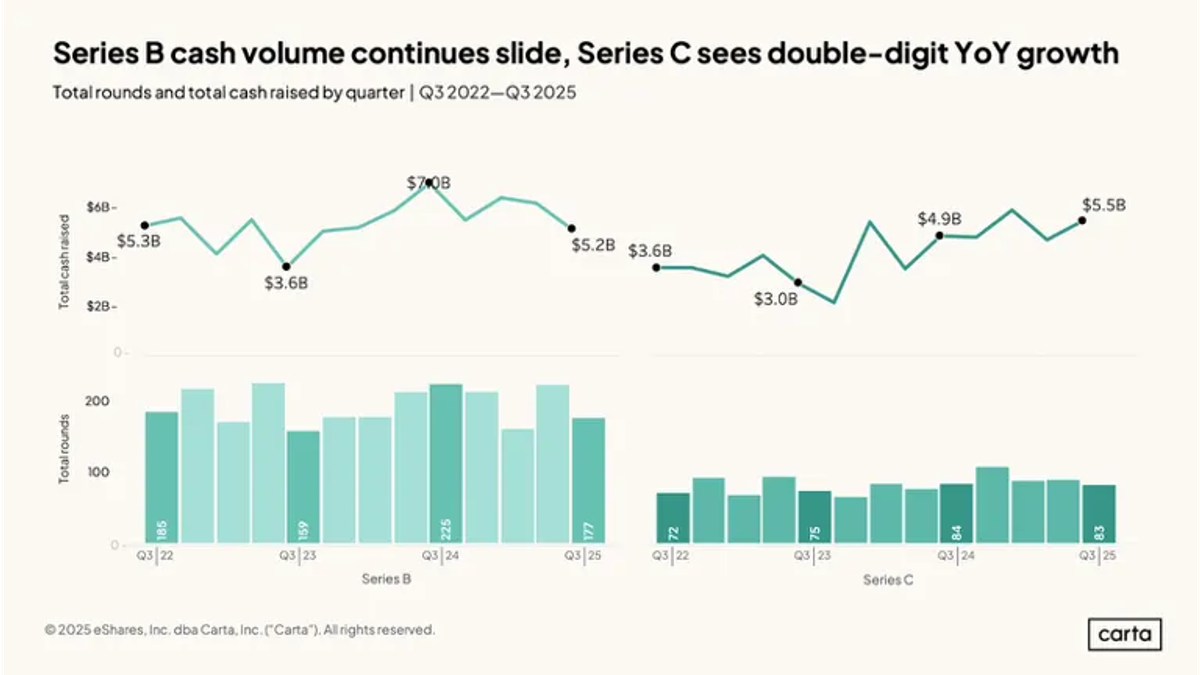
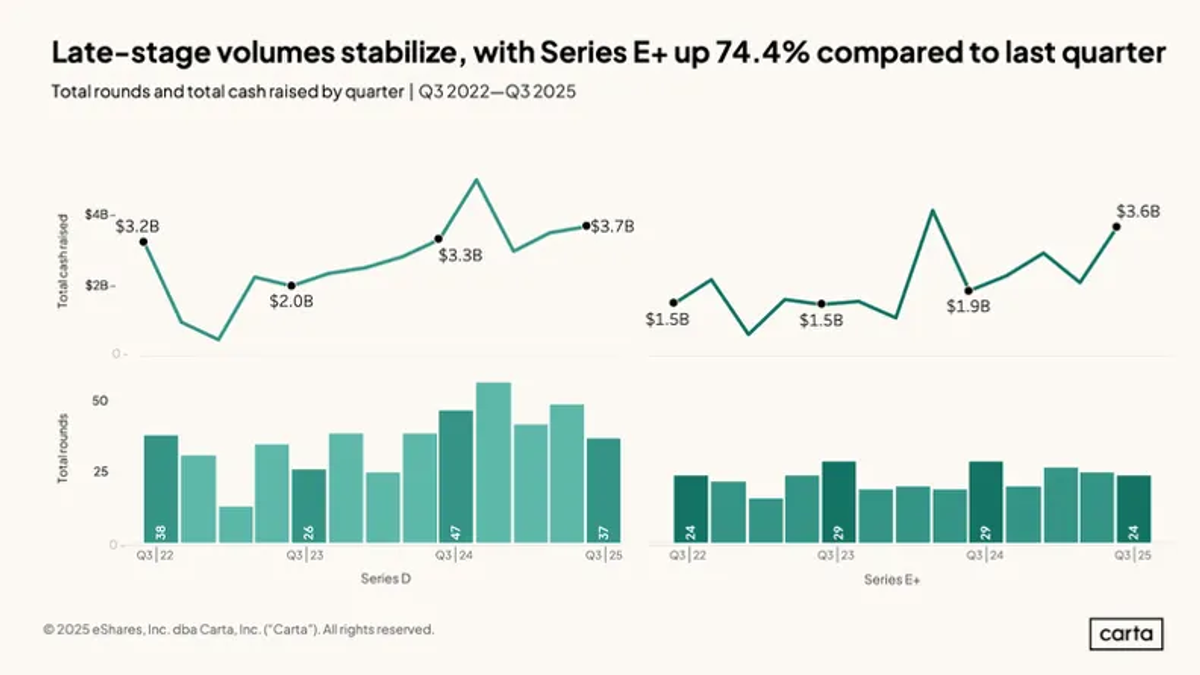
Capital is returning to late-stage first, but through a narrow filter that prioritizes AI leverage and visibility into unit economics.
AI as the Primary Market Driver
AI is no longer a sector. It is the primary allocator of capital across the entire venture stack.
Six of the ten largest VC deals globally were AI-related in Q3, totaling $35.3B. On Carta, the $27.3B U.S. fundraising total was heavily influenced by AI mega-rounds, which now materially affect pricing across all stages.
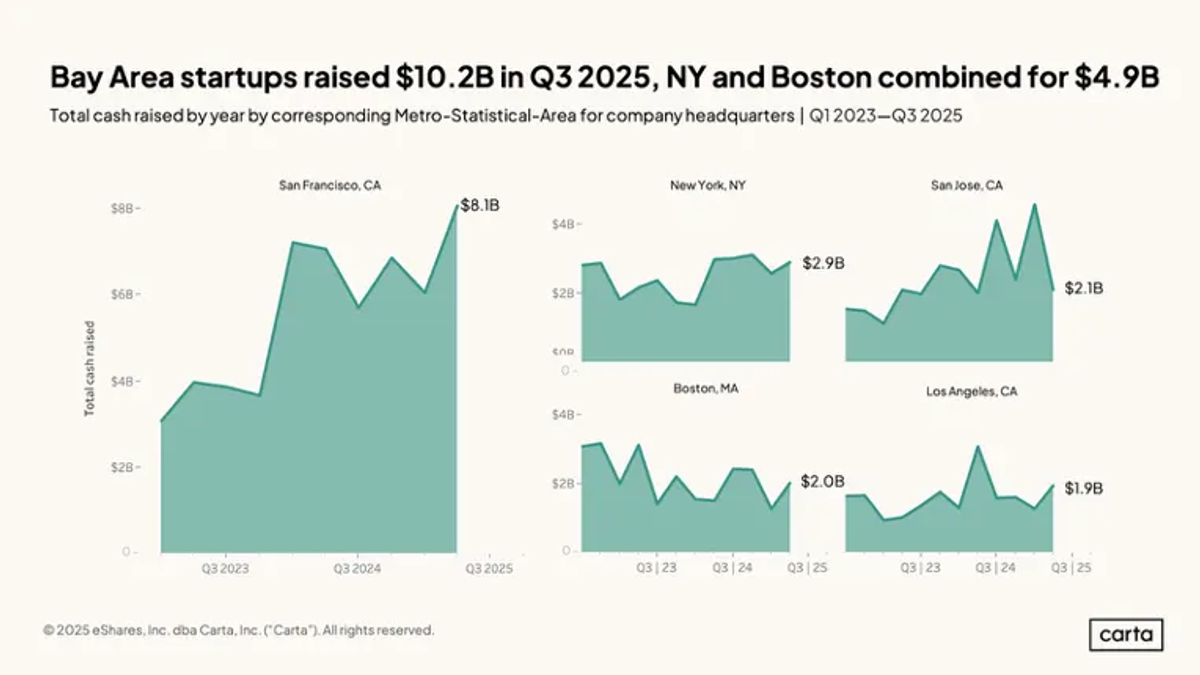
Capital is returning to late-stage first, but through a narrow filter that prioritizes AI leverage and visibility into unit economics.
AI as the Primary Market Driver
AI is no longer a sector. It is the primary allocator of capital across the entire venture stack.
Six of the ten largest VC deals globally were AI-related in Q3, totaling $35.3B. On Carta, the $27.3B U.S. fundraising total was heavily influenced by AI mega-rounds, which now materially affect pricing across all stages.
AI drives where scale forms, where multiples expand, and which segments regain momentum. It is also introducing three structural fragilities:
The core fragility is fixed capex against variable demand. If inference margins reset faster than compute efficiency improves, valuation compression could be abrupt at both the model and infrastructure layers.
Liquidity & Exit Environment
Liquidity and exits remain constrained, but the system is clearly rebuilding.
Press enter or click to view image in full size
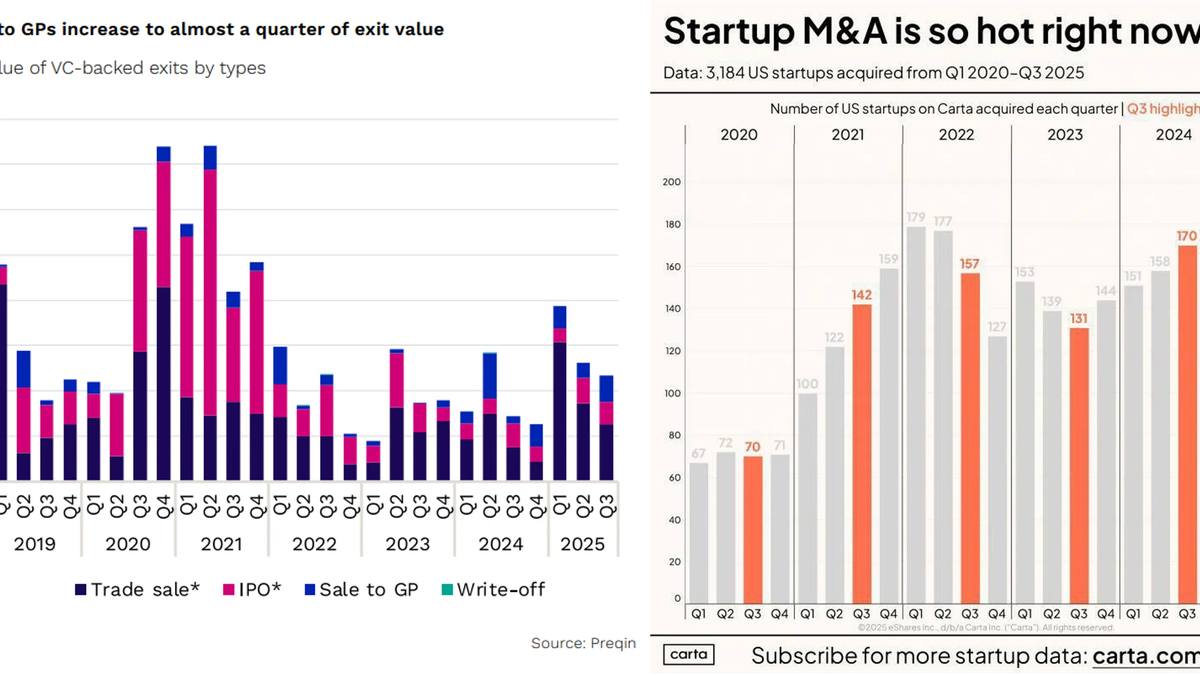
M&A is the most reliable path, with stable buyer activity and strong mid-market momentum led by corporates and GP-led transactions.
The IPO window has reopened selectively, led by AI infrastructure and automation. Issuer and bank sentiments are improving, but activity remains narrow and gated by unit economics rather than scale alone.
Secondaries continue to absorb excess pressure. Volumes are up, discounts have tightened versus 2024, and GP-leds are now a standard portfolio tool for extending duration and delivering interim liquidity.
Exits are returning in pockets, secondary markets are deepening, and capital is circulating again. The liquidity stack is more functional than a year ago, but still fragile.
Fundraising Landscape
LP intent is turning positive. Preqin shows more allocators planning to increase venture exposure over the next 12 months.
The recovery remains bifurcated: AI, frontier tech, and brand-name managers are absorbing the majority of new capital, while generalist funds remain capital-constrained in a slower, higher-bar environment.
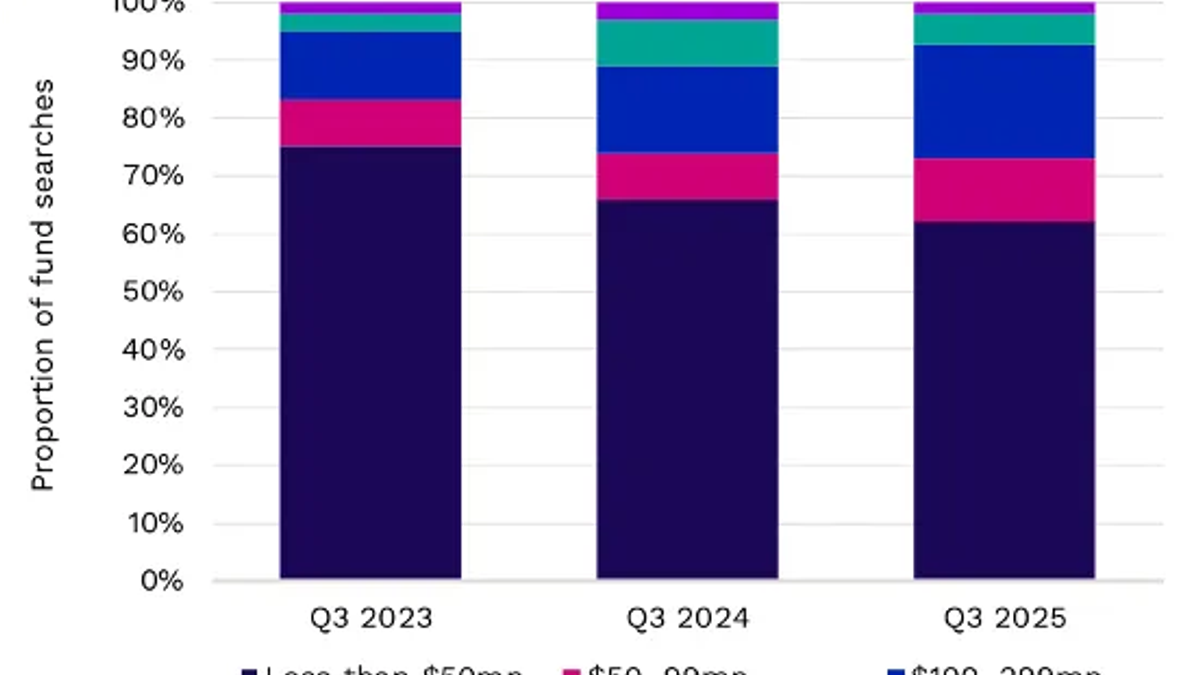
Fundraising is reopening, but only for differentiated platforms with proven or structurally advantaged strategies.
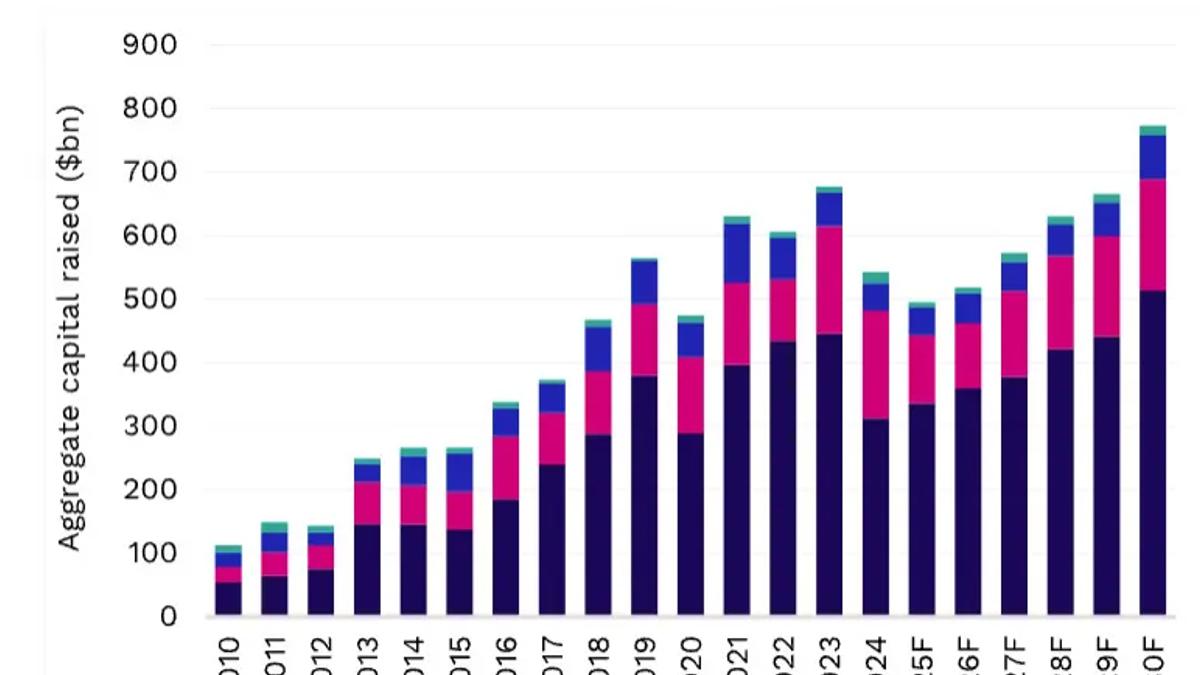
Beyond near-term sentiment, the longer horizon points to a structurally expanding fundraising cycle. Preqin’s long-range forecast shows global private equity and venture fundraising on track to reach a new peak by 2030, driven by deeper institutional participation and the growing share of capital flowing to technology and innovation-led strategies. This trajectory reinforces that today’s selective environment is part of a broader upward curve rather than a cyclical anomaly.
Public Multiples
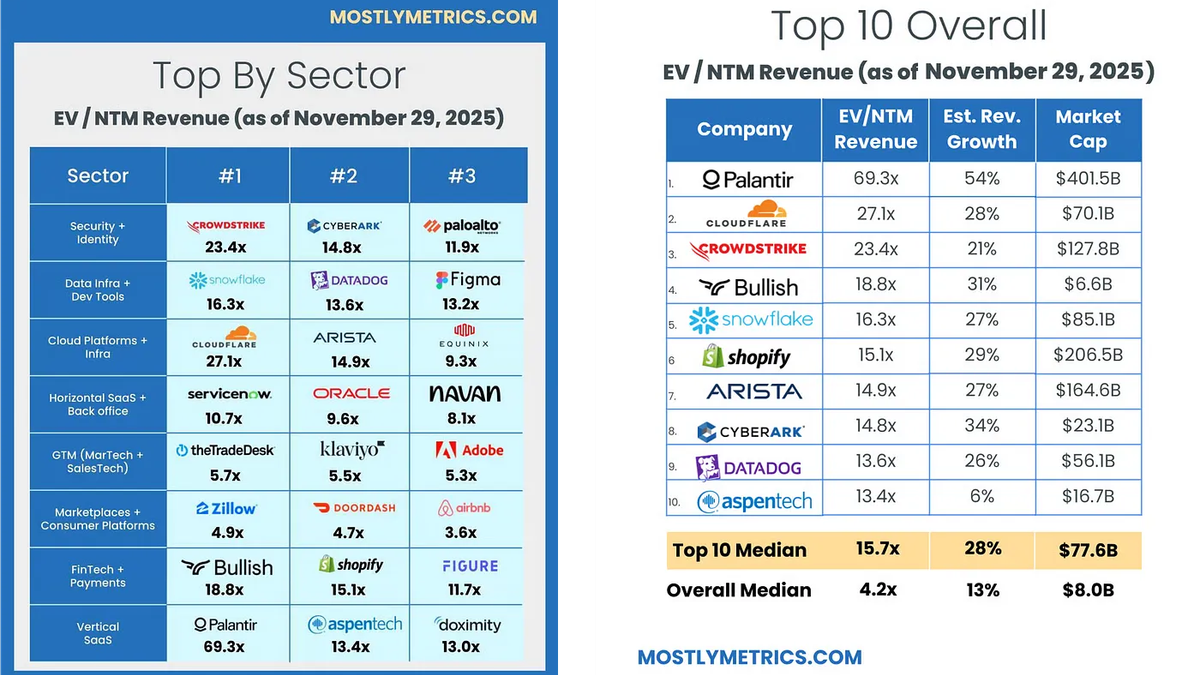
Public market multiples remain highly bifurcated across sectors. Median EV/NTM revenue sits at 4.2x, while leaders in structural growth areas command far higher valuations, with Cloudstrike at 23x, Cloudflare at 27x, and Palantir at 69x. Cloud infrastructure, data infrastructure, and vertical SaaS continue to trade at premium multiples, while consumer marketplaces and GTM tools cluster toward the lower end. The dispersion reflects a market that is underwriting long-duration AI and infrastructure cash flows while marking down anything that looks incrementally replaceable.
Capital Misallocation Risk Within AI
The next regime will be defined less by AI adoption and more by where capital has been misallocated inside the stack:
The market is funding surface area faster than margin structure. That defines the next selection cycle.
Outlook
The 2025 year-end outcome is likely to reflect the same dynamics already shaping the market.
Preqin and Carta both imply AI mega-rounds will continue to dominate headline volumes, keeping global totals structurally top-heavy even as mid-market activity recovers. APAC’s strength, led by China’s industrial automation, energy systems, and compute-intensive buildout, remains the main offset to Western selectivity and continues to anchor global deal value.
In the U.S., late-stage companies are increasingly managing themselves toward 2026–2027 IPO eligibility, which signals restored planning confidence even without a fully open window. Early-stage conditions remain stable but filter aggressively for technical edge, distribution leverage, and capital discipline rather than growth at any cost. LP sentiment is turning positive, but re-risking is gradual and still skewed toward established managers.
Conclusion: The market is operational again but structurally concentrated. Liquidity is improving, capital is moving, and AI is no longer a sector but the organizing layer of the entire venture stack. The system is stronger than at any point since 2021, but it now carries new fragilities tied to capital intensity, margin durability, and valuation methodology that will define the next dislocation.